Rob’s Recipe of the Week: An Unusual Use for Celery
This week I thought I was going to have to go with a Celery soup recipe, but then I came across this gin cocktail which looks worth a try and I guess the celery can still be used as a soup base once it’s served its alcoholic purpose!
Celery tonic

Ingredients:
1 celery stalk, chopped
1 tablespoon sugar
30ml fresh lemon juice
60ml gin
Lemon twist (for serving)
Method:
Muddle celery with sugar and lemon juice in a cocktail shaker, 1 minute. Add gin, fill shaker with ice, and shake until outside of shaker is frosty, about 30 seconds. Strain into a rocks glass filled with ice and garnish with a lemon twist.
Taken from: https://www.bonappetit.com/recipe/celery-tonic
Rebecca’s Recipe of the Week: A Very Elaborate Borscht
In case you have a little time on your hands just now, here is an excellent use of a few hours. The result is the best borscht I, at least, have ever tasted. Alissa Timoshkina, whose recipe this is, notes that if you can make the broth 24 hours in advance, ‘you will be rewarded with an even better tasting soup, but a few hours of resting will also do the trick’.
For the red cabbage sauerkraut, I recommend you get in touch with Canalside member Erica Moody, who makes superb sauerkrauts of all sorts.
Borscht
Serves 4
Ingredients
unrefined sunflower oil, for frying and roasting
1 large onion, finely diced
1 carrot, peeled and grated
6 raw beetroots
2 red peppers
2 tablespoons tomato purée
2 litres cold water
2 bay leaves
1 tablespoon black peppercorns
1 tablespoon coriander seeds
1 tablespoon fennel seeds
4 garlic cloves, peeled
bunch of dill
small bunch of flat leaf parsley
2 garlic cloves, grated
500g red cabbage sauerkraut
2 tablespoons pomegranate molasses
1 red onion
1 tablespoon brown sugar
400g can red kidney beans
2 teaspoons smoked paprika
4 tablespoons soured cream
salt
Preparation
Heat up a tablespoon of sunflower oil in a large pan and fry the onion and carrot for about 8 minutes until golden. Meanwhile, peel and grate 2 of the beetroots and core, deseed and thinly slice 1 red pepper. Add the vegetables to the pan together with the tomato purée and a splash of water. Season with salt to taste and fry for a further 5–8 minutes.
Top with the measured cold water, add the bay leaves along with the peppercorns and all the seeds, whole garlic cloves and half the bunches of dill and parsley. Season with a tablespoon of salt and bring to the boil. Reduce the heat, add the grated garlic and half the sauerkraut with its brine and simmer, covered, over a low heat for 40 minutes–1 hour.
Turn off the heat and let the borscht rest for another hour, while you prepare the rest of the elements.
So far, so good, but here is where the recipe starts to deviate from the norm quite a lot: to prepare the vegetables that will grace the plate and also add extra flavour and texture to the soup, you will need to do a bit of roasting.
Start by preheating the oven to 160°C fan/Gas Mark 4. Peel the remaining 4 beetroots, cut into wedges and dress with oil, salt and the pomegranate molasses. Peel the red onion, cut into wedges and season with salt and the brown sugar to bring out their sweetness and promote caramelization. Place on a roasting tray with the beetroot and roast together for 30 minutes. Drain the kidney beans, then dress them with salt, oil and the smoked paprika. Core and deseed the remaining red pepper, then cut into thin strips and dress with salt and oil. Roast the beans and pepper together, as they will need only 10–15 minutes.
When ready to serve, strain the broth through a sieve or a muslin cloth, discarding the solids. All we need is that rich broth! Reheat again if necessary. Next, create layers of texture and flavour in each bowl by adding a heaped tablespoon of the remaining sauerkraut to each, as well as a handful of roasted beetroot, onion, kidney beans and red pepper. Top each bowl with the hot broth and add a dollop of soured cream and a generous sprinkle of the remaining dill and parsley, chopped. The intensity of the flavours and textures of this dish is beyond words, while the look of the bowl will seduce the eye without a doubt.
Recipe from Alissa Timoshkina, Salt & Time: Recipes from a Russian Kitchen (2019).
2020 – May news: Don’t Mind the Gap
The spell from mid May to mid June is the dreaded ‘hungry gap’: the time when the growers are scratching around down the back of the sofa desperate for anything, anything at all vaguely veg-like to put in the share. Well, don’t know if you’ve noticed but that hasn’t really happened this year!
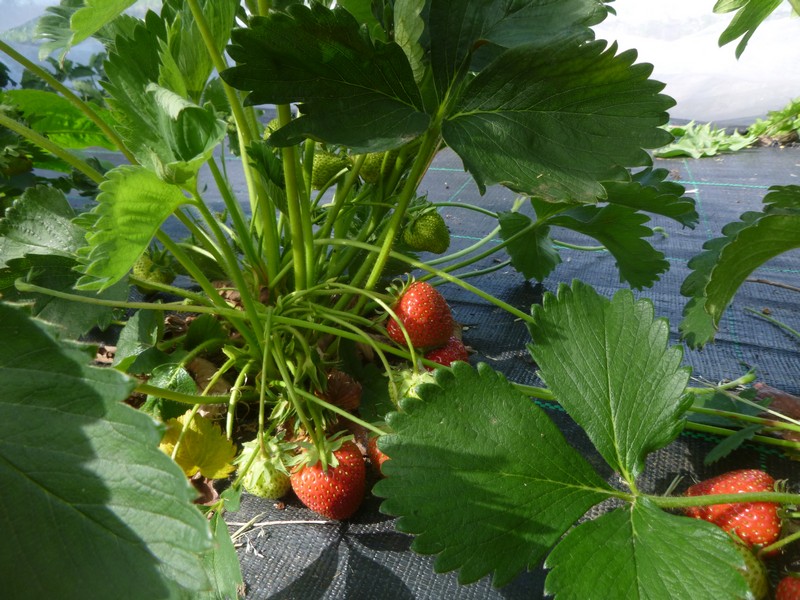
Early strawberries, ripe for the picking 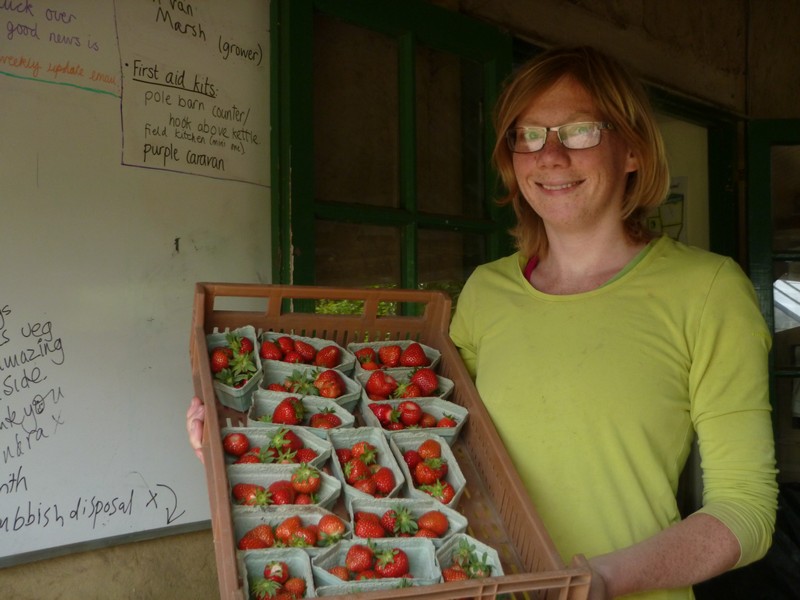
The first strawberry shares
New projects (e.g. the strawberries) have come good, new varieties have thrived (e.g. overwintering broad beans and onions) and our usual staples are all here a bit earlier (e.g. tunnel carrots and potatoes).
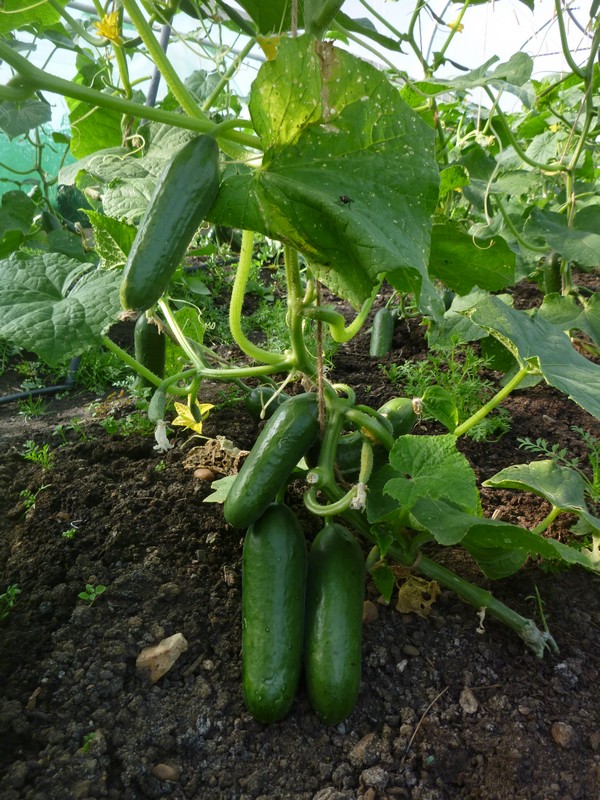
Bumperlicious cucumbers 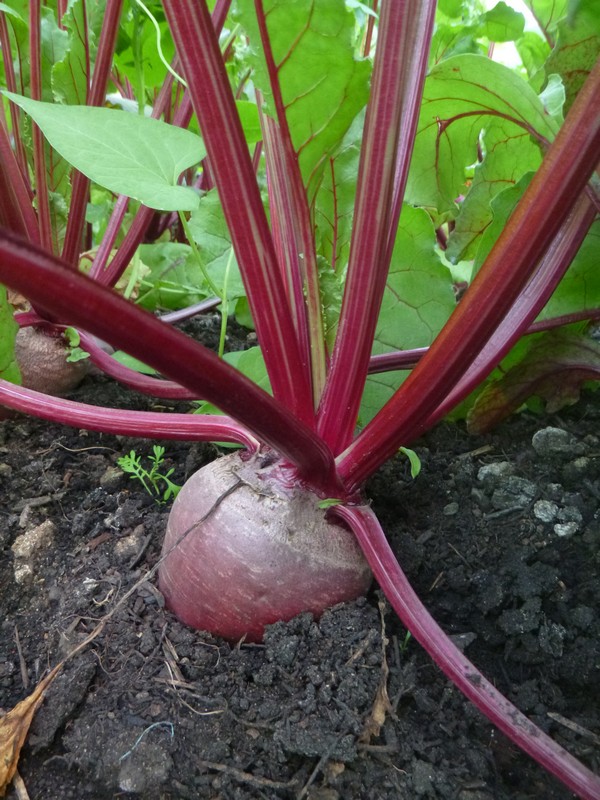
Tunnel beets looking swell!
The weather has been outstanding for early production (provided we can get enough water out there), but most of all it is down to our superb volunteers, toiling away – at a social distance – in the baking heat every Wednesday and Saturday. You have kept the crops weed free and got the seeds sown, and kept us well ahead of the game at a crucial time. Enjoy the bumper ‘hungry gap’ share!
Rob’s Recipe of the Week: Potato salad with a new season variation
Potato salad is something that drops off my radar too frequently, but this week we got a large haul of radishes and new potatoes with more expected next week. With that it mind it seems a good idea to make something fresh and easy for lunch in the sun, enjoy!
Potato and radish salad
Serves 4

Ingredients
500g new potato, sliced
3 tbsp crème fraîche (I think Oatly and Alpro both do alternatives)
1 tbsp grainy mustard
1 bunch chive, snipped
200g radishes, sliced
Method
Cook the potatoes in a large pan of boiling, salted water for 8-10 mins or until tender. Drain and allow to cool for 10 mins.
Mix the crème fraîche, grainy mustard and chives with some seasoning, then toss through the radishes and potatoes before serving.
Adapted from: https://www.bbcgoodfood.com/recipes/potato-radish-salad
Rebecca’s Recipe of the Week: Spare Squash
I managed to accumulate several Canalside squash in my fridge over the last fortnight. I was going to make them into a cake (and if that’s what you’d like I commend to you this recipe for brown butter spice bread.) Instead I ended up making this easy, flavourful roast squash with a spicy, umami-rich chile oil. The chile oil complements the unctuousness of the squash and is absolutely delicious. Serve it with steamed greens for a colourful and satisfying dinner.
Whole Roast Squash with Black Bean and Chile Oil
Serves 2
Ingredients
2 Canalside squash shares (not that the size is super important)
2 tablespoons rapeseed oil
3 cloves garlic, peeled and sliced fine
1 tablespoon salted black beans, rinsed
a fragment of a Canalside chile, or 1-2 teaspoons chile flakes
1 tablespoon soya sauce
1 teaspoon caster sugar
Preparation
Heat your oven to 180C. Remove the seeds from the squash.1 Put the de-seeded squash on a baking sheet and roast it until it is tender and golden, 45-75 minutes. Remove from the oven.
Meanwhile, make the black bean and chile oil. Over a low flame, heat the rapeseed oil in a small saucepan for 1 minute. Add the garlic and fry gently for 1-2 minutes, until the garlic is golden brown and a little sticky. Remove the pan from the heat and add the black beans. Return to the heat and add the chile, soya sauce, sugar and 2 tablespoons of water. Heat for about 20 seconds, stirring constantly. Remove from the heat and let cool.
When the squash is cooked, you can either cut it into slices and serve warm, or let it cool before slicing. In either case drizzle the black bean and chile oil over the top and serve with a side of steamed green vegetables.
Recipe adapted from Meera Sodha, East (2019).
Rob’s Recipe of the Week: A ‘Harvesting Gap’ Salad
I tried a variation of this recipe tonight and it went down very well, it used a lot of Canalside produce and felt like an incredibly healthy meal! Feel free to adapt to what you have – I swapped the salad for boiled greens, the canned lentils for boiled red lentils and omitted the pomegranate seeds. I would be tempted to suggest some soy sauce on the lentils to cut through the sweetness of the other components (rocket probably does this job if you have it).
Roasted beets and squash with tahini
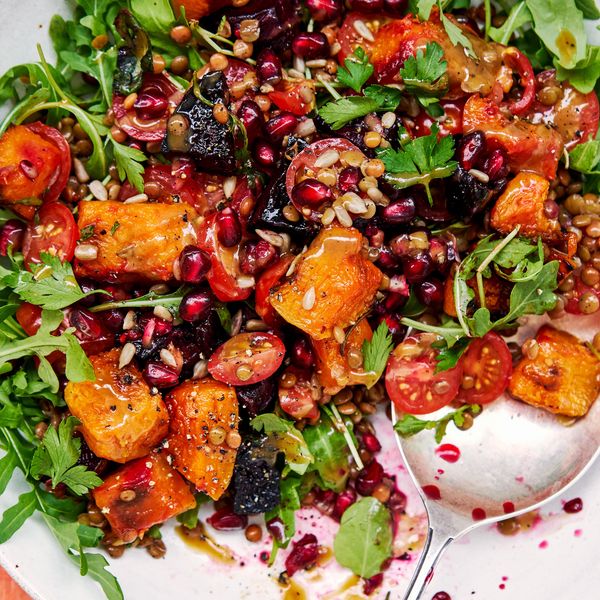
Ingredients:
2 large raw beetroots, peeled and chopped
1 medium squash, deseeded and chopped (no need to peel our squash)
Leaves from 2 rosemary sprigs, chopped
1 tbsp olive oil
1 tbsp maple syrup (I used honey)
1 × 400g tin brown lentils, drained and rinsed
200g mixed rocket and other salad leaves
200g cherry tomatoes, quartered
4 tbsp sunflower seeds
Handful fresh parsley, finely chopped
4 tbsp pomegranate seeds
Salt and black pepper
For the tahini vinaigrette:
3 tbsp extra-virgin olive oil
1 tbsp tahini
1 tsp maple syrup (I used golden syrup)
1 tsp Dijon mustard
1–2 tsp balsamic vinegar (to taste)
Method:
Preheat the oven to 200°C fan.
Place the beetroot, butternut squash and rosemary in a large baking tray or roasting tin and toss in the olive oil, maple syrup and some salt and pepper until evenly coated. Spread out the vegetables in a single layer and roast in the oven for 40–50 minutes, stirring once halfway through the cooking time, until tender and slightly crisp.
Meanwhile, combine all the ingredients for the tahini vinaigrette together in a bowl, seasoning to taste with salt and pepper.
Place the lentils and salad leaves in large bowl with the cherry tomatoes and a small drizzle of the tahini vinaigrette and toss until evenly coated.
Transfer the dressed salad to a serving dish and add the still-warm roast vegetables in layers with the sunflower seeds, parsley and pomegranate seeds. Finish with a generous drizzle of vinaigrette.
Adapted from: https://thehappyfoodie.co.uk/recipes/roasted-beets-and-butternut-squash-with-tahini
Rebecca’s Recipe of the Week: David Lebovitz’s Radish Leaf Soup
Freakily, last week two different people, from two different continents, sent me this recipe for radish leaf soup. I feel that is a sign that the recipe must now be shared with everyone at Canalside, even though, lacking a potato, I have not yet had a chance to make it myself. Let me know how you get on with the peppery, leafy radish leaves that are doubtless still sitting in your fridge from last week. It looks delicious—please note especially the suggestion of topping your soup with ‘pumpkin seeds, sliced radishes, crème fraîche, sour cream, olive oil, freshly cracked black or a pinch of red pepper powder, scallions, edible flowers, fresh herbs, a dollop of pesto, or a dribble of pumpkin seed oil’.
Radish Leaf Soup
6-8 servings

I (that’s David Lebovitz) strongly suggest you use radish leaves that are unsprayed or organic, and wash them well to make sure all grit has been removed. If you don’t have enough radish leaves, feel free to make half the recipe, or bulk it up with lettuce or another mild green. Something like spinach, kale, or Swiss chard will overtake the flavor of the radish leaves (although it’s not the end of the world if you’re trying to use up odds and ends of various greens), but you could use arugula in addition to the radish leaves, or something similar. I don’t peel the potatoes but you are welcome to. If using commercial chicken stock, cut the salt in half and add more, to taste. If you don’t have chicken stock, water or vegetable stock works fine. I added a touch of heavy cream, which smoothed things out nicely and gives the soup a subtle richness, but offered a few alternatives. You could use more, or use regular milk (cow or plant-based), or leave it out. Possible garnishes are, but are not limited to, pumpkin seeds, sliced radishes, crème fraîche, sour cream, olive oil, freshly cracked black or a pinch of red pepper powder, scallions, edible flowers, fresh herbs, a dollop of pesto, or a dribble of pumpkin seed oil.
Ingredients
2 tablespoons butter, salted or unsalted
2 tablespoons olive oil
1 large onion, peeled and diced, or 2 leeks, cleaned and sliced
1 1/2 teaspoons kosher or sea salt
freshly ground black pepper (I used a total of about 1 teaspoon of pepper)
4 cloves garlic, peeled and sliced
2 medium potatoes, washed and diced, (12-16oz, 340-450g)
2 cups (500ml) water
12 cups (lightly packed) fresh radish leaves, rinsed very well (9 oz, 270g)
3 cups (750ml) chicken stock
1 tablespoon Dijon mustard
1/8 teaspoon cayenne pepper
1/2 cup (125ml) heavy cream, sour cream, mascarpone, or creme fraiche
Preparation
- Heat the butter and olive oil in a soup pot or Dutch oven over medium-high heat. Add the onions and cook, stirring frequently, seasoning them with the salt and pepper, until soft and translucent, about 5 minutes. Add the garlic and stir for a minute or two, to help them release their aroma.
- Add the potatoes and 2 cups of water to the pot. Cover, bring to a boil then reduce the heat to a steady simmer and cook until the potatoes are tender when poked with the tip of a sharp paring knife, about 10 to 15 minutes.
- Add the radish leaves and stock. Cover, bring to a boil, then reduce the heat and simmer just until the radish leaves are wilted and cooked through. Remove from heat.
- If using an immersion blender, add the cream, mustard, cayenne, and cream to the pot and puree until smooth. If using a standard blender, let the soup cool until tepid then puree the soup with the cream and mustard. (Never fill a blender more than half full with hot liquid as it can blow off the lid and cause injuries.) Rewarm the soup and serve with any of the suggested garnishes.
Recipe from David Lebovitz, https://www.davidlebovitz.com/radish-leaf-soup-recipe-soupe-fan-radis-recette/.
Rob’s Recipe of the Week: Spring Dal
We’re getting some huge spring greens at the moment and I’ve discovered a few new recipes involving them as a result. I make Dhal fairly regularly but rarely follow a recipe. This one is a really good introduction though, I was quite amazed at how rich it tasted and I’m really not sure what the difference was to my usual attempts! Make sure you cook until the lentils are soft, I’m often too impatient.
Spring Green and Coconut Dal

Ingredients (Serves two)
1 tbsp coconut oil
1 onion, finely sliced
1 large or 2 small garlic cloves, finely chopped, grated or crushed
4cm piece of fresh ginger, peeled and finely grated
1 red chilli, finely sliced
1 tsp black mustard seeds
¼ tsp ground turmeric
1 x 400ml tin coconut milk
100g yellow mung dal lentils, rinsed in a sieve (I used red lentils)
1 tsp coriander seeds, toasted and ground
1 tsp cumin seeds, toasted and ground
200g spring or summer greens, tough ribs removed (sliced them and fired with the onion), leaves finely shredded. Feel free to go heavy on the greens I found they worked well.
handful of coriander leaves
a squeeze of lime or lemon juice
toasted coconut chips or toasted desiccated coconut, to garnish
salt
Method
Prep time: 5 min
Cooking time: 50 min
Melt the coconut oil in a large pan. Add the onion and fry on a low heat for 10 minutes, stirring occasionally.
Turn up the heat a little and add the garlic, ginger, chilli, mustard seeds and turmeric. Stir for about 1 minute, until you hear the mustard seeds start to pop. Stir the coconut milk in the can then pour into the pan with the lentils and ground coriander and cumin. Fill the coconut milk can half full with water and add that too.
Bring up to the boil, reduce the heat and simmer for about 15 minutes. Add the greens, stirring in small handfuls at a time, then cook for a further 5–10 minutes, until the lentils are tender and the greens wilted. Keep an eye on the liquid and add more water if needed.
Season the dal with salt, stir in the fresh coriander and add a squeeze of lime or lemon juice to taste. Serve the dal prinkled with toasted coconut and a few extra coriander leaves.
Adapted from: https://www.riverford.co.uk/recipes/spring-green-and-coconut-dal
Rebecca’s Recipe of the Week: Gingery Green Noodles
This is another very fast dish of delicious slurpy noodles, spiked with basil, lime juice and sesame oil.
Ginger-Poached Noodles
Serves 2-3
Ingredients
4 cups vegetable broth (I used water with 2 tablespoons of white miso)
2 ounces fresh ginger, peeled and thinly sliced
8 ounces firm tofu or tempeh, cut into small cubes
approximately 2 cups of sprouting broccoli or shredded spring greens
4 ounces dried noodles of your choice (I used soba noodles)
1-2 tablespoons soya sauce
¼ cup fresh basil, shredded
¼ cup fresh mint, shredded
juice of half a lime
crushed red pepper flakes (I used part of a shredded Canalside chile)
toasted sesame oil
Preparation
Place the broth and ginger in a large saucepan and bring to a boil. Lower the heat, and simmer gently for ten minutes or so. Meanwhile, bring some water to the boil to cook the noodles.
Cook the noodles in the boiling water until they are tender, drain them, and set them aside.
After the broth has simmered for ten minutes add the and tofu or tempeh and the greens. Return to a boil, and then turn the heat back down to a simmer and cook for 5-8 minutes, or until the greens are tender.
Add the drained pasta to the broth and heat for a few more minutes, stirring regularly. Stir in the soya sauce, basil, mint, and lime juice. Before serving, if you have the energy you can fish out the slices of ginger, which are perfectly edible but a bit chewy.
Serve in bowls with a few pinches of crushed red pepper flakes, and a drizzle of sesame oil, to taste.
Recipe adapted from 101 Cookbooks.
Virtual blossom walk
The orchard is looking amazing at the moment – the apple blossom is at its peak and the cherry trees that still have blossom have an abundance of it! Hopefully all the blossom foretells of a bountiful crop of fruit this summer, all being well through the growing season.
Click here to watch:
Credits: Filming, editing and music: Eleanor Brown